Jobra drops you into a broken repo. Find it, fix it, ship it. AI helps you debug like on the job.
Interview Type: Off-Campus (Employee Referral)
Result: Rejected (Final Round)
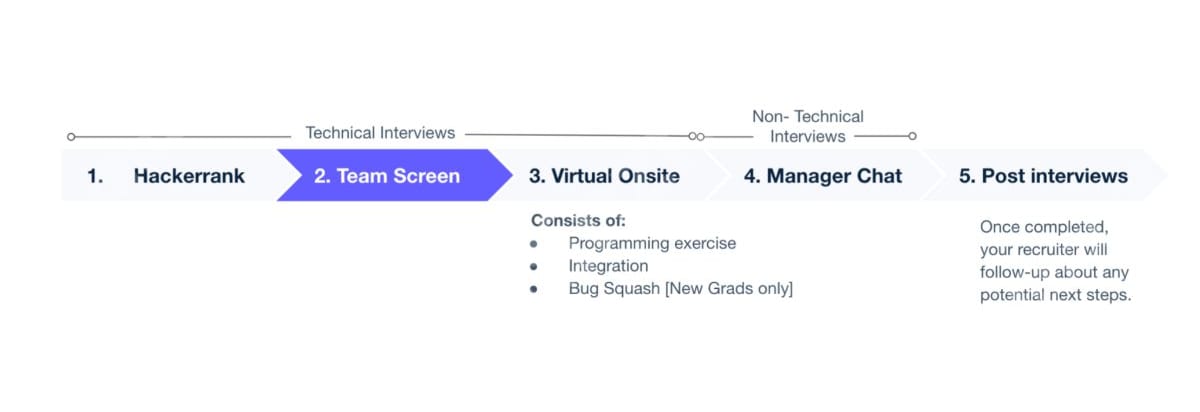
Hiring Process: Online Assessment + 4 Interview Stages
| Date | Stage | Status |
|---|---|---|
| 31 August | OA Link Received | — |
| 2 September | Online Assessment | Completed |
| 6 September | Shortlisted for Technical Interview | Cleared |
| 15 September | Technical Team Screen | Cleared |
| 2 October | Virtual Onsite (2 Technical Rounds) | Completed |
| 9 October | Final Managerial Round | Completed |
| 12 October | Final Result | Rejected |
I applied for the role through an employee referral that I received through an open-source connection. This was an off-campus hiring process and not part of any college placement drive.
1 hard question having 3 parts on hackerrank https://codinzhub.com/question/merchant-fraud-score-stripe-oa-x2f-online-assessment
The assessment was conducted on HackerRank and was primarily focused on implementation rather than conventional DSA problems.
Last updated Nov 16, 2026
Stripe's assessment pattern was quite different from typical coding tests. Instead of solving one standalone algorithmic problem, candidates were given a problem divided into multiple parts, where each subsequent part extended the previous implementation.
Preparation Suggestions:
The emphasis was more on practical coding and incremental development than solving difficult LeetCode-style problems.
Duration: 60 mins
This round followed a similar approach to the online assessment. The interviewer focused on implementation skills, understanding requirements, and extending an existing solution as new conditions were introduced. The questions were relatively straightforward, although some requirements were worded ambiguously. The candidate recalled completing approximately four parts of the problem.
Key Areas Evaluated:
Duration: 60mins
BikeMap Integration Exercise
This round involved working with an existing codebase and progressively implementing additional functionality.
The candidate received access to a GitHub repository, cloned it locally, and was asked to make the required code changes.
Tasks involved:
The exercise consisted of five parts, and the candidate successfully completed all 5/5 parts.
Important Details:
Duration: 60mins
The second technical interview focused on an AI-related engineering task. Similar to the previous round, the problem was divided into multiple stages, with each stage introducing additional complexity and requirements. The candidate successfully completed 4 out of 5 parts. Both technical interviews were closer to practical software engineering tasks than traditional algorithm-focused interviews. Being comfortable with unfamiliar codebases, understanding requirements, debugging, and implementing features incrementally was particularly important.
Duration: 30mins
The final stage was intended to be a discussion about the candidate's background, previous projects, experience, and motivation for joining Stripe. However, the interview ended considerably earlier than the scheduled time. The candidate felt that there were very few follow-up questions and insufficient discussion around their previous engineering work. Despite clearing the technical stages, the candidate eventually received a rejection call on 15 October. According to the feedback communicated by the recruiting team, this round was the primary reason for the rejection. The candidate also shared their concerns with the recruiting team following the decision.
The candidate mentioned having more experience building and maintaining real-world software than competitive programming, which also made the practical engineering format of Stripe's interviews particularly interesting.
Final Advice: Stripe's interview process places considerable emphasis on practical engineering and implementation skills. Being able to understand an existing codebase, build features incrementally, and write reliable code can be just as important as traditional DSA preparation.